If you’re exploring options to replace missing teeth, you’ve likely come across two common solutions: dental implants and dentures. Both treatments are designed to restore your smile and improve function, but they work in very different ways.
Understanding the differences between dental implants and dentures can help you make a more informed decision about which option may be best for your needs, lifestyle, and long-term goals.
Let’s break down how each solution works, along with the benefits and considerations of both.
What Are Dentures?
Dentures are removable appliances designed to replace multiple missing teeth. They sit on top of the gums and are custom-made to fit comfortably in the mouth.
There are different types of dentures:
- Full dentures — Replace all teeth in the upper or lower arch
- Partial dentures — Replace several missing teeth while preserving remaining natural teeth
- Implant-supported dentures — Snap onto dental implants for added stability
Traditional dentures rely on suction or adhesive to stay in place.
Benefits of Dentures
Dentures are often recommended because they:
- Replace multiple teeth at once
- Are typically more affordable upfront
- Do not require oral surgery (in traditional cases)
- Can improve appearance and speech
For many patients, dentures provide a practical and efficient solution for restoring a complete smile.
Considerations With Dentures
While dentures are effective, there are some factors to keep in mind:
- They may shift or move while eating or speaking
- They require daily removal and cleaning
- Bone loss can occur over time since the jawbone is not stimulated
- Adjustments or replacements may be needed periodically
Proper care and regular dental visits can help maintain comfort and function.
What Are Dental Implants?
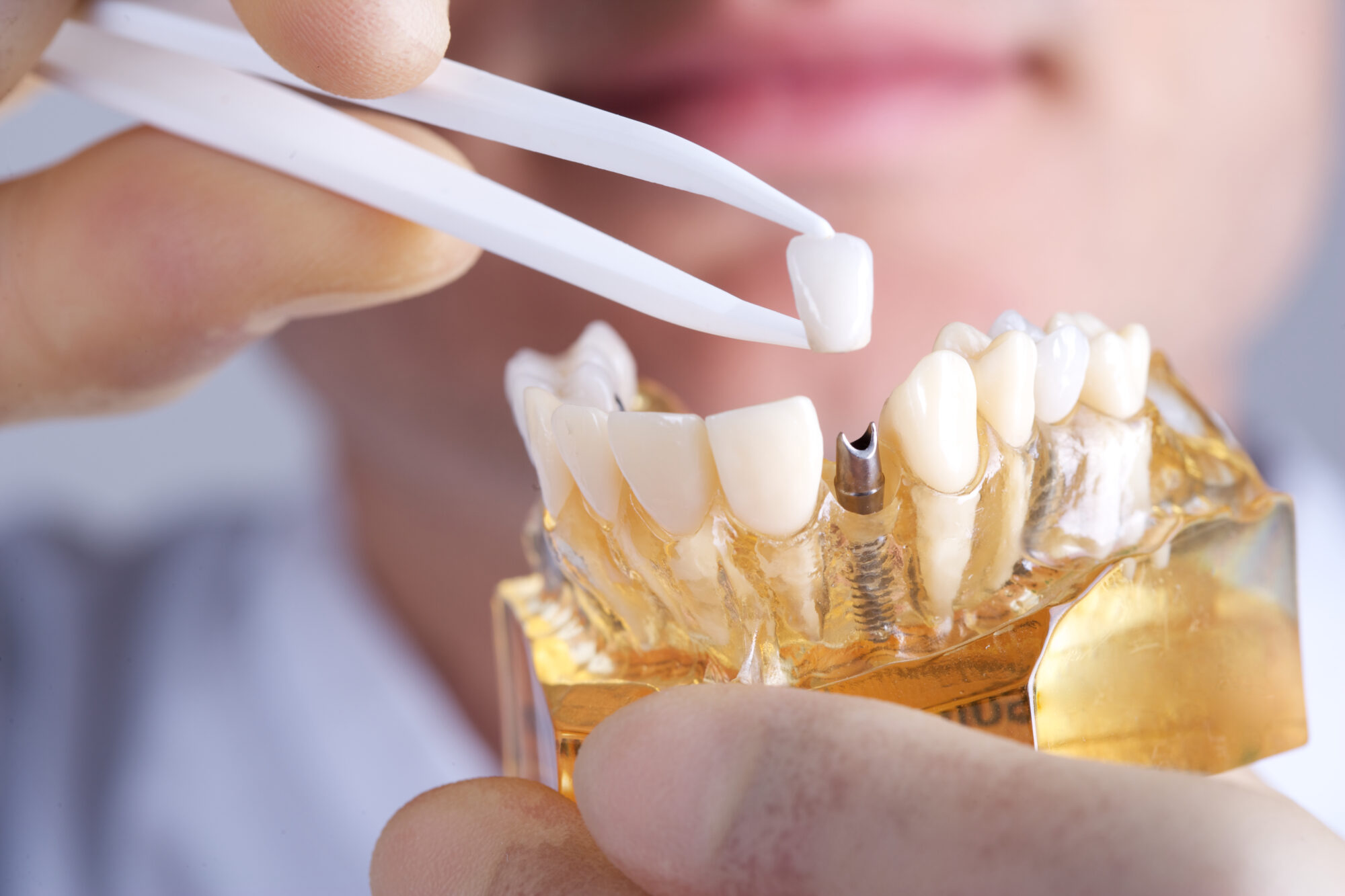
Dental implants are permanent tooth replacement solutions designed to mimic natural teeth. A small titanium post is surgically placed into the jawbone, where it acts as an artificial tooth root. Once healed, a crown, bridge, or denture is attached to the implant.
Because implants fuse with the bone, they provide a stable and durable foundation.
Benefits of Dental Implants
Dental implants are often chosen for their long-term advantages:
- They function like natural teeth
- They help preserve jawbone density
- They do not rely on surrounding teeth for support
- They are fixed in place and do not shift
- They can last many years with proper care
For patients seeking a stable, long-lasting solution, implants offer a strong and secure option.
Considerations With Dental Implants
Implants may not be ideal for everyone. Some factors to consider include:
- They require oral surgery
- Healing time is necessary before final restoration
- They generally involve a higher upfront investment
- Adequate bone density is required for placement
A thorough evaluation is typically needed to determine candidacy.
How Do Dental Implants and Dentures Compare?
Here’s a side-by-side look at key differences:
- Stability — Implants are fixed in place, while traditional dentures are removable
- Bone Health — Implants stimulate the jawbone and help prevent bone loss; dentures do not
- Maintenance — Dentures require removal for cleaning; implants are brushed like natural teeth
- Longevity — Implants can last decades; dentures may need replacement every 5–10 years
- Comfort — Implants often feel more like natural teeth
The right choice depends on individual preferences, oral health, and long-term goals.
Which Option Looks More Natural?
Both dentures and implants are designed to look natural and restore the appearance of a complete smile.
However, implants are often considered more natural in both appearance and function because they are anchored directly into the jawbone. They do not shift or create changes in facial structure over time due to bone loss.
Well-made dentures can also look very natural, especially when custom-designed for the patient’s smile and facial features.
Cost Differences Between Dental Implants and Dentures
Cost is an important factor for many patients.
Dentures generally have a lower upfront cost. However, they may require periodic adjustments, relines, or replacements over time.
Dental implants typically involve a higher initial investment, but they often last significantly longer and may reduce the need for future replacements.
Long-term value depends on factors such as oral health, maintenance, and overall treatment goals.
Who Is a Good Candidate for Dentures?
- Are missing multiple teeth
- Prefer a non-surgical solution
- Have experienced significant bone loss
- Are looking for a more cost-conscious option
A dental evaluation can help determine whether traditional or implant-supported dentures may be appropriate.
Who Is a Good Candidate for Dental Implants?
- Have healthy gums
- Have sufficient bone density
- Want a fixed, long-term solution
- Prefer minimal movement while eating or speaking
In some cases, bone grafting procedures can help patients qualify for implants if bone loss has occurred.
Making the Right Decision for Your Smile
Choosing between dental implants and dentures is a personal decision that should be based on:
- Oral health condition
- Budget considerations
- Comfort preferences
- Long-term expectations
- Lifestyle factors
A comprehensive consultation and exam can provide clarity on which option aligns best with your needs.
Considering Tooth Replacement Options in Land O’ Lakes, FL?
If you’re exploring dental implants or dentures and want guidance tailored to your unique situation, Land O’ Lakes Dental Care is here to help.
Our team provides personalized evaluations and customized treatment plans designed to restore comfort, function, and confidence. We take the time to explain your options clearly so you can make an informed decision about your smile.
Contact our office today to schedule a consultation and learn more about your tooth replacement options.